Flow technology machines
Pumping, material handling and volumetric machines
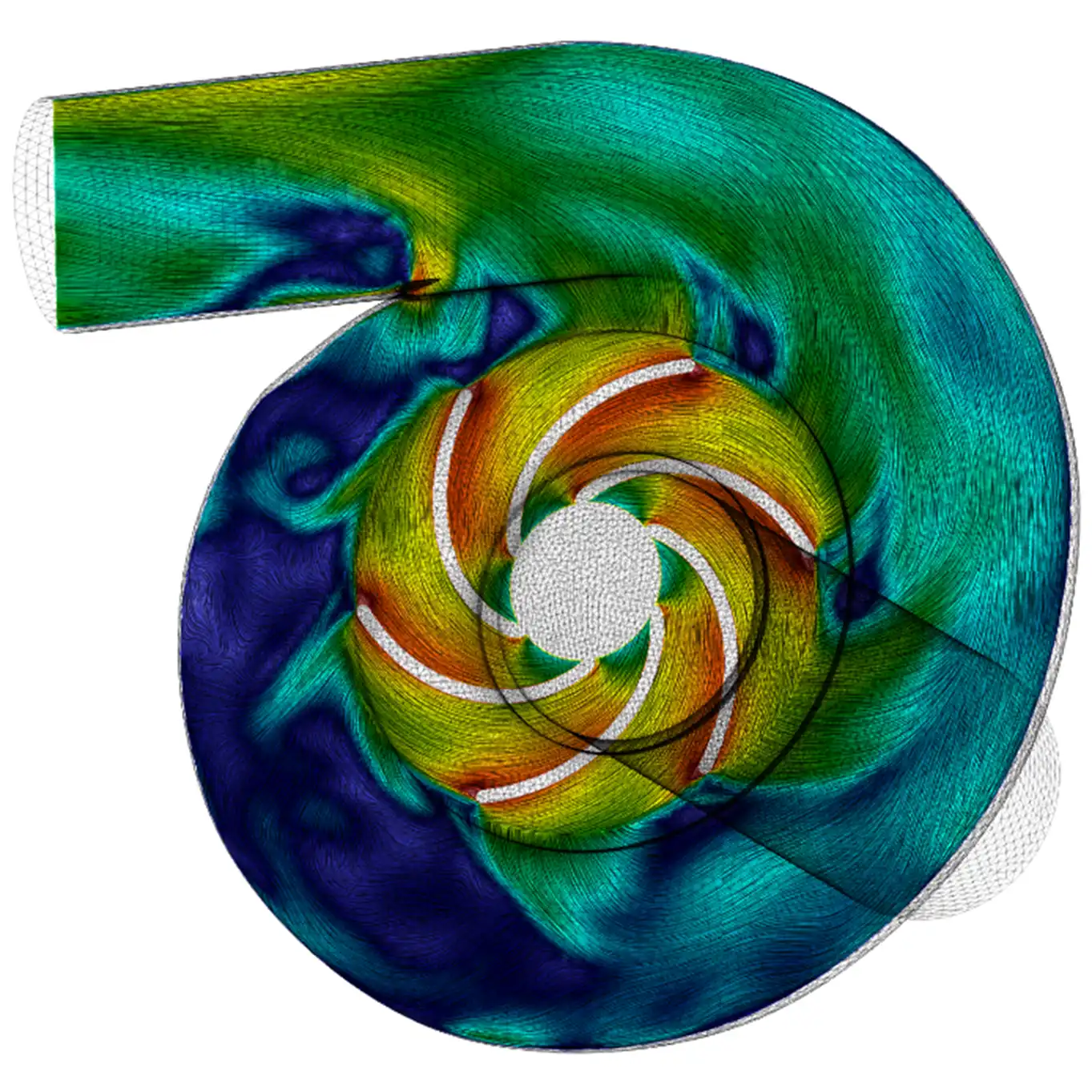
Support and advice on the design, operation and troubleshooting of fluid technology machines and systems. Selection and design of pumps, fans and compressors. Hydraulic analysis, energy evaluation, efficiency improvement and detailed CFD studies. Comprehensive inspection of drinking water and wastewater systems, air conditioning networks, petroleum, natural gas and air conditioning systems. Inspection of valves and other fittings, capacity planning, troubleshooting.
Water networks
Network optimization, water quality improvement, cost reduction
Comprehensive hydraulic analysis of drinking water supply systems: pump selection, increasing energy efficiency, localization of losses and leaks. Water quality prediction: optimal chlorination strategies, identification of biologically hazardous areas. Biofilm modeling, prediction of biological activity.
Ventilation problems
Loss reduction, acoustic problems, vibration
CFD simulation and measurement
Virtual prototyping, optimization, on-site fluid technology measurement
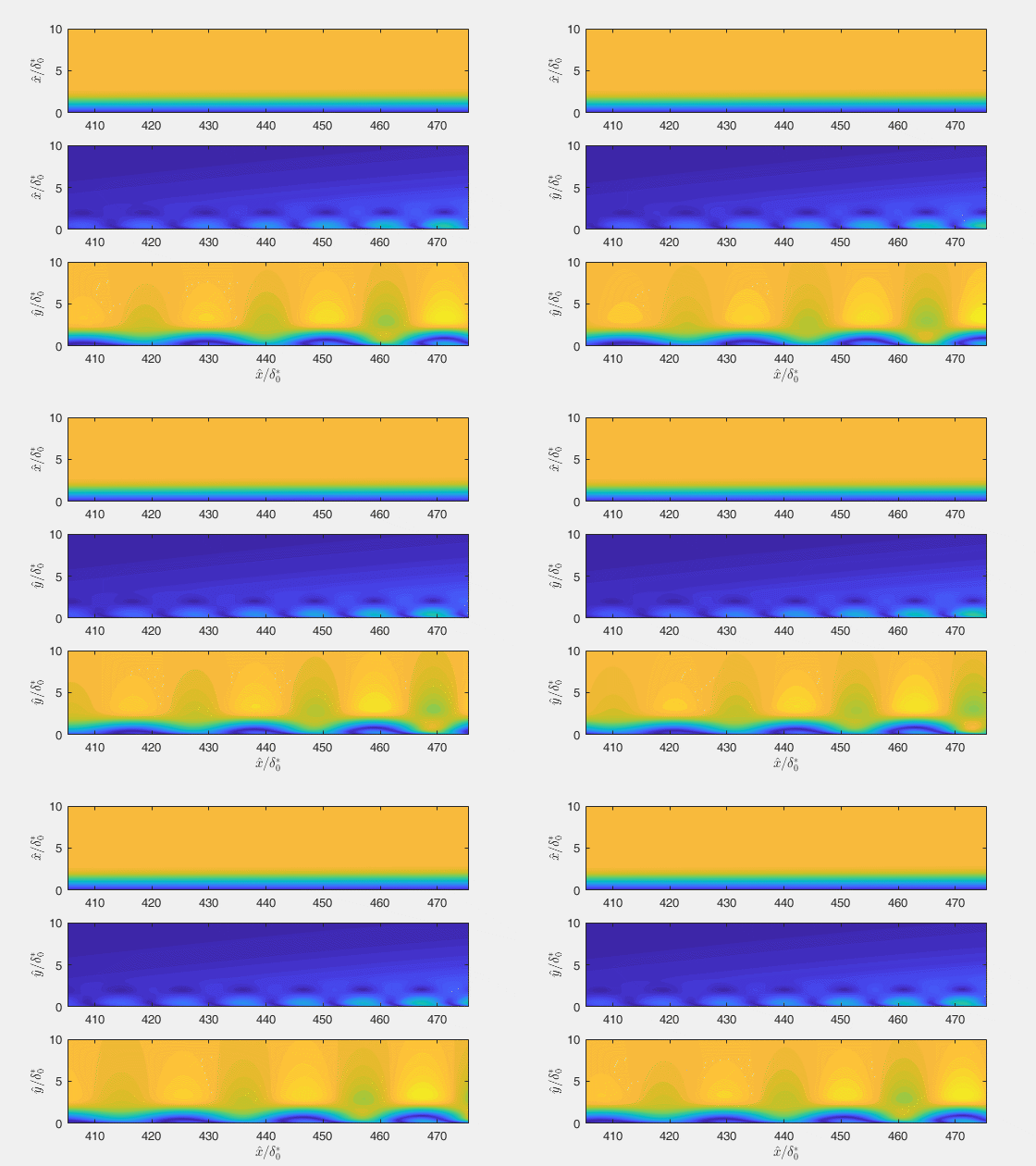
Our partners come to us with unique fluid technology problems that often go beyond quick, industrial solutions. We explore the problem area with numerical flow simulations (CFD), on-site measurements, or our own laboratory experiments. Based on the results, we either immediately propose a solution, or a more detailed investigation, optimization, or research and development phase may follow.


Biofluidics
Image processing, data analysis, human vascular system modeling
Using imaging techniques, we create a digital copy of the vascular system or vascular segment. We can perform various tests, including CFD calculations, on the created geometry, thus enabling us to examine the development of diseases and analyze patient populations.
Our reference works
Stationary pipe network modeling
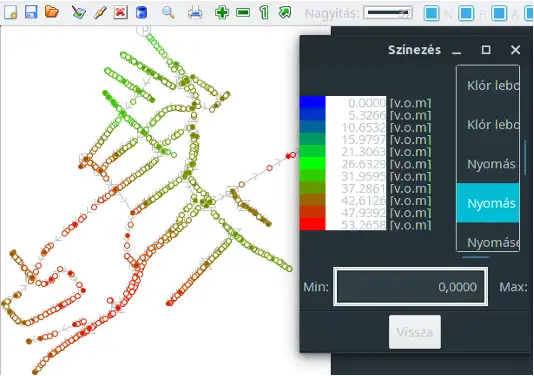
We have conducted steady-state pipe network modeling for several partners, using both our proprietary code (the Staci program) and the EPANET software. These calculations analyze the steady-state behavior of pipe networks, including branch flows, flow velocities, nodal pressures, water levels in open channels, water age (residence time), and chlorine concentration distribution. Additionally, our proprietary program runs as background support for our partner’s geographic information system, allowing the immediate assessment of any operational changes to the network through automatic simulation.
Partners: Budapest Metropolitan Water Works, Sopron Water Works Ltd.


Transient pipe network modeling
At the request of our partner, the Department examined the impact of large consumers on the hydraulic systems of Hungarian cities, focusing especially on transient phenomena in the planned water network. The modeling was divided into two main parts: the sudden shutdown and startup of pumps, and the abrupt cessation of industrial consumption. Special attention was given to the minimum (below atmospheric pressure) and maximum (>10 bar) pressure levels occurring in individual pipelines. In the first case, infiltration (contamination from groundwater), pipe collapse, or even fluid column splitting may occur, while high pressures can lead to pipe bursts. These studies were carried out using computer simulations.
Partners: FŐMTERV Engineering Design Ltd., Sopron Waterworks Ltd.


Pump impeller shape optimization
The energy consumed by fluid machinery represents a significant portion of the world’s total energy production, so even small improvements in efficiency can lead to substantial global energy savings. Moreover, the geometric design can be optimized not only for water but also for specialized fluids, including those with non-Newtonian rheology. In our related research, we have carried out measurements and numerical simulations to study and optimize the design of pump impellers for water applications.
Partners: Grundfos South East Europe Ltd., Elpumps Ltd.


Kayak paddle development
In elite sports, the technical characteristics of the equipment used can be as important as the athlete’s performance. For our partner, we developed a kayak paddle geometry with improved hydrodynamic properties compared to those currently available on the market. This was achieved through numerical flow simulations combined with laboratory measurements for validation.
Partner: Best Paddle Sports Equipment Manufacturer and Distributor Ltd.
Testing of pipes, pipe fittings, and flow measurement systems
The primary purpose of testing flow components and fittings is to ensure compliance with the applicable national standards and to independently verify the data provided by the manufacturers. In addition, our laboratory performs loss coefficient measurements, as well as leakage and pressure tests, on behalf of our partners.
Partners: Euroflow Zrt., Kristály Kft., Elpumps Kft., Ometrys Kft., ASG Kft.


UV water purifier – disinfection equipment design
As a result of our research and design work, a custom-made UV water purification system was developed for the Csepel drinking water treatment plant to complement chlorine-based water treatment. We conducted hydraulic and CFD-based dose calculations, as well as our own laboratory measurements to estimate the arrangement and intensity of the UV lamps.


